
60
Years of Combined Experience
Stop Wood Damage Before It Spreads
Professional carpenter bee solutions protecting homes throughout Hoover, Alabama.
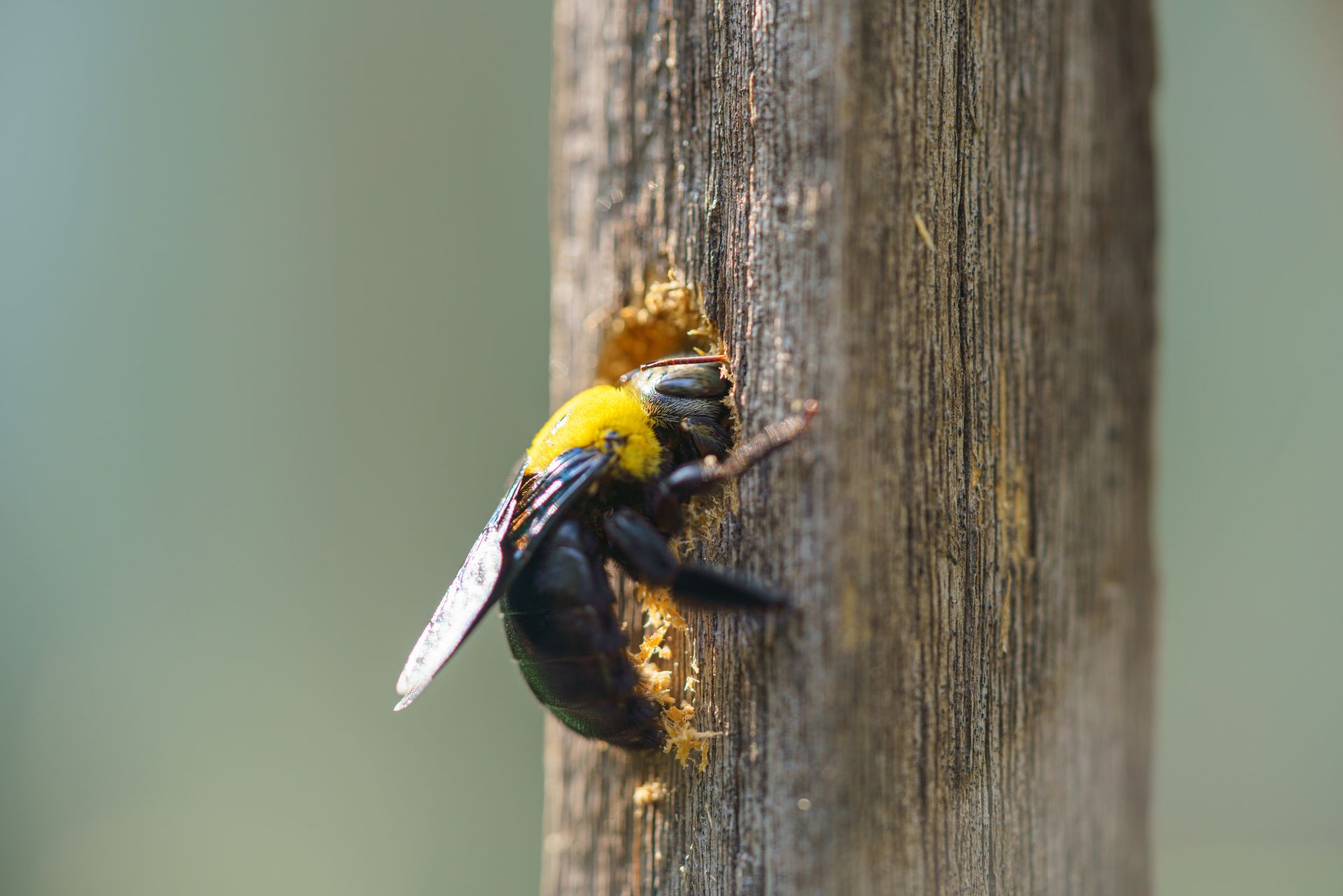
If you own a home in Hoover with exposed wood trim, a deck, or siding, you may have noticed perfectly round holes drilled into the surface during late spring or summer. Those holes are entry points carved by carpenter bees, and while they do not consume wood like termites, their tunneling activity weakens railings, fascia boards, and other exterior features over time. The damage often begins small but expands each year as bees return to the same nesting sites and excavate deeper galleries.
Tailored Pest Solutions uses targeted treatment methods to address active carpenter bee drilling sites and apply preventative barriers to wood surfaces throughout your Hoover property. The service includes identifying current nesting zones, treating exposed wood where bees are actively boring, and applying residual protection to reduce the likelihood of seasonal return. Each application focuses on the areas most vulnerable to carpenter bee activity, including eaves, posts, and horizontal wood elements that absorb sunlight and attract nesting females.
If you have noticed fresh sawdust beneath your deck or holes appearing in your trim each spring, contact Tailored Pest Solutions to schedule a carpenter bee inspection in Hoover.
What Changes After Treatment is Applied
When you schedule carpenter bee solutions in Hoover, a technician inspects all accessible wood surfaces for active drilling, staining, and visible bee activity. Treatment is applied directly to entry holes and surrounding wood, using professional-grade products that target nesting adults and deter future tunneling. The technician also evaluates whether structural repairs or wood sealing may help reduce long-term vulnerability.
After treatment, you should notice a reduction in hovering male bees near treated areas and a decline in new hole formation. Carpenter bees that contact treated wood surfaces are affected by the residual application, and untreated females are less likely to bore into wood that has been protected. The visible sawdust piles that often accumulate under nesting sites will stop appearing as drilling activity ceases.
This service does not repair existing holes or restore damaged wood grain, but it does prevent further tunneling in treated zones. Homes with ongoing seasonal carpenter bee pressure may benefit from annual reapplication before peak activity begins in April and May. The treatment works best when wood surfaces are dry and bees are actively seeking nesting locations.
We Know You May Have a Few Questions
Homeowners often ask how quickly carpenter bee treatments work, whether the service affects other pollinators, and what steps can be taken to prevent bees from returning to the same wood each season.
Most applications provide protection for several months, depending on exposure to rain, sunlight, and weathering. Reapplication before the next nesting season helps maintain long-term solutions and reduces the chance of new drilling.
If you see fresh holes appearing in your deck posts or notice large black and yellow bees hovering near your home's wood trim, Tailored Pest Solutions can evaluate the extent of the activity and apply treatment designed to protect your Hoover property from further damage.